Invisalign
Invisalign in Broomfield, CO
Clear aligner treatment planned around your smile and bite
Written by Dr. Irina Sharp, board-certified orthodontist. Last reviewed September 2026.
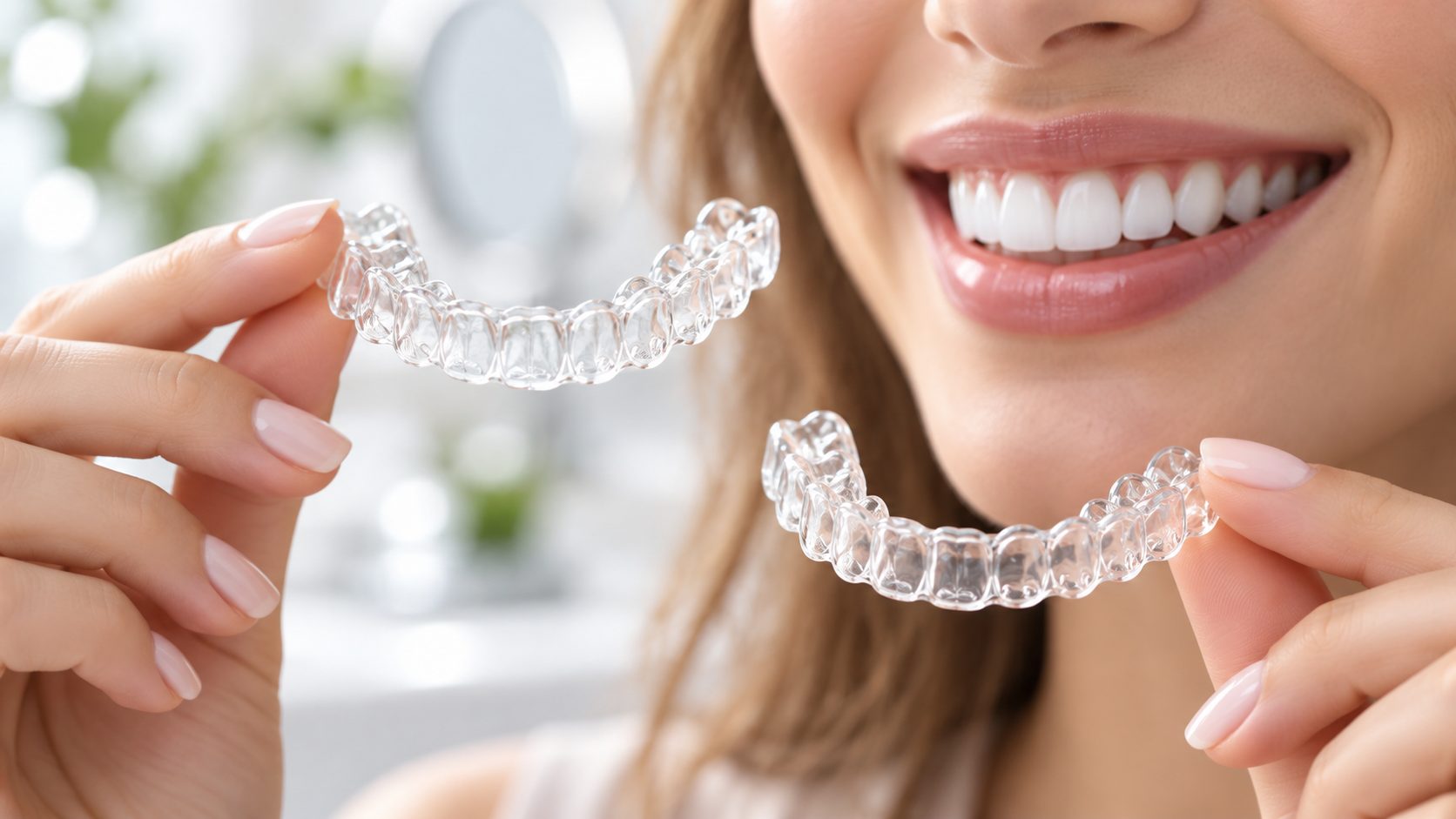
Invisalign treatment uses a series of clear, removable aligners to move the teeth gradually. Each set is created for a specific stage of treatment and works as part of an individualized plan designed by the treating orthodontist.
At Sharp Smiles Orthodontics, Invisalign treatment is not simply a sequence of trays. Dr. Irina Sharp evaluates the teeth, roots, bite, supporting bone and gum health, facial balance, and treatment goals before determining whether clear aligners are appropriate and how they should be used.
For the right patient, Invisalign aligners can provide effective treatment with a subtle appearance and the convenience of removal for meals and oral hygiene. They also require consistency. The aligners can only guide the planned movement when they are worn as directed.
How does Invisalign treatment work?
Treatment begins with a clinical examination and diagnostic records. At your consultation, we typically take facial and smile photographs, a 3D digital scan of your teeth with an iTero scanner, and 3D imaging to evaluate the teeth, roots, and jaws in detail. These records help us evaluate the diagnosis and create a three-dimensional treatment plan.
A series of aligners is then manufactured for the planned stages of movement. Each aligner places controlled pressure on selected teeth. As one stage is completed, the patient changes to the next aligner according to the schedule provided by the orthodontist.
The digital plan is a valuable planning tool, but it is not a guarantee that teeth will move exactly as shown on a screen. Regular clinical monitoring allows us to compare the plan with the biological response and make changes when needed.
What can Invisalign treat?
Depending on the diagnosis and treatment design, Invisalign aligners may be used to address:
- Crowded, overlapping, or rotated teeth
- Spaces between teeth
- Certain overbites, overjets, underbites, crossbites, and open bites
- Upper and lower dental arches that need better coordination
- Relapse after previous orthodontic treatment
- Tooth positions that need correction before restorative dental care
Clear aligners are not the most predictable option for every movement or every bite. Some cases are treated more effectively with braces, a combination of appliances, or treatment coordinated with another dental specialist. We explain those limitations before treatment begins.
Who may be a good candidate?
Invisalign treatment may be appropriate for adults, teenagers, and selected younger patients. Candidacy depends on the diagnosis, oral health, and the ability to wear and care for the aligners consistently.
A good candidate is generally prepared to:
- Wear the aligners for the prescribed number of hours each day
- Remove them for eating and for drinks other than plain water
- Keep the teeth and aligners clean
- Store the aligners safely whenever they are out of the mouth
- Wear elastics or use other prescribed auxiliaries when needed
- Attend monitoring visits and communicate if an aligner stops fitting
Why patients choose Invisalign treatment
Patients often consider Invisalign treatment because the aligners are clear and removable. Potential advantages include:
- A subtle appearance in everyday conversations and photographs
- Removal for meals, brushing, and flossing
- No brackets or wires attached to the teeth
- The ability to continue eating a normal range of foods after removing the aligners
- Digital planning that helps the orthodontist design and sequence treatment
Clear does not mean invisible, and removable does not mean optional. Tooth-colored attachments, elastic hooks, or other features may be visible at conversational distance, and consistent wear remains central to treatment.
Invisalign or braces?
Both Invisalign aligners and braces can move teeth, but they manage treatment differently. The best choice depends on the movements required, bite complexity, oral health, lifestyle, and how reliably the appliance can be managed.
| Option | Potential advantages | Important considerations |
|---|---|---|
| Invisalign aligners | Clear and removable for meals, brushing, and flossing. | Depend on consistent wear and responsible storage. Attachments, elastics, or additional aligners may be needed. |
| Braces | Fixed to the teeth, continuously active, and capable of detailed control for a wide range of movements. | Require careful cleaning, food precautions, and attention to loose brackets or wires. |
- Invisalign aligners
- Potential advantages: Clear and removable for meals, brushing, and flossing.
- Important considerations: Depend on consistent wear and responsible storage. Attachments, elastics, or additional aligners may be needed.
- Braces
- Potential advantages: Fixed to the teeth, continuously active, and capable of detailed control for a wide range of movements.
- Important considerations: Require careful cleaning, food precautions, and attention to loose brackets or wires.
Neither appliance is automatically better for everyone. If both can accomplish the clinical goals, we compare the practical differences so the patient can make an informed choice. See braces.
How many hours a day should aligners be worn?
Invisalign aligners are typically worn 20 to 22 hours per day, although the exact instructions come from the treating orthodontist. They are generally removed only for eating, drinking anything other than plain water, brushing, and flossing.
Repeatedly leaving aligners out for long periods can allow the teeth to drift away from the planned position. The next aligner may then feel unusually tight or may not seat fully. If this happens, contact us rather than changing the schedule on your own.
What are attachments and elastics?
Many Invisalign plans use small, tooth-colored shapes called attachments. They are bonded to selected teeth and give the aligner a more effective surface for applying force. Their number, shape, and location depend on the movements being planned.
Some patients also need small buttons, hooks, or orthodontic elastics to improve the bite. These features can make treatment more visible, but they may be important to achieving the intended result. Not every patient needs them.
Will I need enamel reduction?
Some treatment plans include interproximal reduction, or IPR, to create a small, measured amount of space between selected teeth. It may help manage crowding, tooth-size differences, or the shape of the final contact points.
IPR is not required in every case. If it is recommended, we explain where it will be performed, why it is useful, and how it fits into the overall plan before proceeding.
Does Invisalign treatment hurt?
It is normal to notice pressure or tenderness when beginning treatment or changing to a new aligner. This generally reflects the force being applied to the teeth and often improves as the mouth adjusts.
An aligner edge or attachment may occasionally irritate the lips, cheeks, or tongue. Contact us if discomfort is sharp, severe, persistent, associated with swelling, or different from the expected pressure of tooth movement.
Eating and drinking with aligners
Remove the aligners before eating. Plain water is generally the only beverage recommended while they are in place. Colored drinks can stain the aligners, hot liquids may affect their shape, and sugary or acidic beverages can become trapped against the teeth.
After eating, clean the teeth before reinserting the aligners whenever possible. If brushing is temporarily unavailable, rinse the mouth and aligners thoroughly, then brush as soon as practical.
How to clean Invisalign aligners
Clean aligners help them remain clear, fresh, and comfortable. Follow the instructions provided by the orthodontic team and the product manufacturer. In general:
- Rinse aligners when they are removed
- Clean them gently with lukewarm water and the recommended cleaning method
- Avoid very hot water, which can affect the plastic
- Brush and floss the teeth before putting clean aligners back in
- Keep aligners in their case rather than wrapping them in a napkin or placing them in a pocket
Questions about your own aligner plan?
How often are Invisalign appointments?
Regular monitoring visits allow us to check aligner fit, tooth movement, the bite, attachments, elastic wear, and oral health. Appointment timing varies with the treatment stage and the patient's needs.
Bring the aligners requested by the office to each visit. If a tray stops fitting, an attachment comes off, or the bite feels unexpectedly different, contact us instead of waiting for the next scheduled appointment.
What are refinements?
Teeth do not always respond exactly as predicted. If additional movement is needed, we may obtain new records and order another series of aligners. This is often called a refinement or additional-aligner phase.
A refinement does not necessarily mean treatment has failed. It is a way to update the plan based on the actual response of the teeth. The need for additional aligners and the number of stages vary by patient.
How long does Invisalign treatment take?
Invisalign treatment time varies from patient to patient. It depends on the starting problem, the complexity of the bite, the amount and type of movement required, and the biological response. Consistent wear, keeping appointments, maintaining oral health, and following elastic instructions can also affect progress.
After reviewing the diagnostic records, we can provide an individualized estimate. That estimate may change if the treatment plan changes or the teeth respond differently than expected.
How much does Invisalign cost in Broomfield?
At Sharp Smiles Orthodontics, the cost of Invisalign treatment depends on the complexity of the case and the number of aligners and refinements required. We provide a written fee estimate after your consultation and diagnosis.
- Payment options: low down payments, monthly payment plans and third-party financing available.
- Dental insurance: many dental plans include an orthodontic benefit, often with a lifetime maximum, and Invisalign is generally covered the same as braces under most plans. We will verify your benefits for you.
- HSA and FSA: accepted.
What if an aligner is lost or damaged?
Contact our office before deciding whether to return to the previous aligner, move to the next one, or wait for a replacement. The best step depends on where you are in the wear schedule and how the teeth are tracking.
Keep the most recently completed aligner unless we tell you otherwise. It may be useful temporarily if a current aligner is lost, but it should not be used as a substitute without individualized instructions.
Can I play sports or an instrument?
Invisalign treatment is compatible with most sports and musical activities. Aligners are not athletic mouthguards. For contact or collision sports, use an appropriate mouthguard and follow our instructions about when to remove and replace the aligners.
Wind and brass musicians may find removable aligners easier to adapt to than fixed brackets, but individual comfort varies. Keep total daily wear time in mind if the aligners are removed for practice or performance.
Invisalign for teenagers
Invisalign treatment can be a good option for responsible teens whose orthodontic problems are suitable for aligners. The removable design can simplify brushing, eating, sports, and musical activities, but success depends on wearing the aligners consistently and keeping track of them.
We include the teen and parent in the decision. We discuss appearance, school routines, meals, sports, travel, elastic wear, and what will happen if the aligners are not being worn enough. A teen's preference matters, but the appliance must also be able to accomplish the clinical goals. See teen orthodontics.
Invisalign for adults
Adults often choose Invisalign treatment because the aligners are discreet and can be removed for meals, professional events, and oral hygiene. Healthy teeth can be moved at many ages, but adult planning requires careful attention to gum and bone health, existing dental work, missing teeth, wear, and restorative goals.
Some adult cases are straightforward. Others require coordination with a general dentist, periodontist, oral surgeon, or restorative specialist. We clarify those relationships before treatment begins. See adult orthodontics.
Can children use Invisalign?
Clear aligner treatment may be considered for selected children in mixed dentition. Invisalign First is designed for certain younger patients who still have a combination of baby and permanent teeth, but it is not appropriate for every Phase I problem.
The decision depends on the developing bite, tooth eruption, growth, the specific objective of early treatment, and whether the child and family can manage aligner wear. Some children are better served by an expander, limited braces, another appliance, observation, or a combination of approaches. See early orthodontic treatment.
What happens after Invisalign treatment?
When active tooth movement is complete, retainers help protect the result. Teeth can continue to shift throughout life, so retainer wear is an ongoing part of orthodontic care rather than an optional final detail.
We explain the retainer type, wear schedule, cleaning, storage, and when to contact us. A retainer that feels tight, is damaged, or no longer fits should be evaluated rather than forced into place.

Meet Dr. Irina Sharp

Dr. Irina Sharp, DMD, is a board-certified orthodontist and the owner of Sharp Smiles Orthodontics in Broomfield. She earned her DMD at the University of Nevada, Las Vegas School of Dental Medicine and completed her orthodontic residency at the University of Colorado School of Dental Medicine, where she also earned a Master of Science in Dentistry. She is a Diplomate of the American Board of Orthodontics.
At Sharp Smiles Orthodontics, technology supports the diagnosis; it does not replace it. Dr. Sharp designs and monitors treatment based on clinical findings, biological response, and the patient's goals.
Your questions are part of the process. We welcome conversations about appearance, attachments, comfort, timing, cost, work or school routines, previous treatment, and whether braces may be a better choice. Our role is to explain the options clearly and recommend the approach that best fits the clinical problem.
Serving Broomfield and nearby communities
Sharp Smiles Orthodontics welcomes Invisalign patients of all ages from Broomfield and nearby communities, including Thornton, Superior, Louisville, Lafayette, Erie and Arvada.
We don’t just tell you what we recommend. We help you understand why.

Align assigns provider tiers each year by case volume and experience. Dr. Sharp holds the 2026 Gold tier, which is a measure of how much aligner treatment she does, not a guarantee about any one result.
Looking for something else?
Questions
Before you book
Is Invisalign as effective as braces?
For many diagnoses, yes. For certain complex movements, braces may be more predictable. Dr. Sharp will tell you honestly which option best fits your specific bite.
How many aligners will I need?
This varies by patient and is determined by your individual treatment plan.
What if I only wear my aligners at night?
Aligners are designed for about 20 to 22 hours of wear a day. Wearing them only at night is not enough to achieve the planned movement, and we would need to discuss whether a different approach is more realistic for your routine.
Do you offer Invisalign for teens and children?
Yes. See teen orthodontics. We also evaluate younger children for Invisalign First when appropriate.
Do you also offer braces?
Yes. Sharp Smiles offers both braces and Invisalign and will recommend whichever can best achieve your goals. See braces.
Can Invisalign correct my bite, or does it only straighten teeth?
Invisalign can correct many bite problems, not only crooked front teeth. With attachments, elastics and careful planning, aligners can correct a crossbite, reduce an overbite or improve how the back teeth meet. Some bites still call for braces or a combined approach, which is why Dr. Sharp decides after examining the case rather than beforehand.
Schedule an evaluation
Schedule an Invisalign consultation in Broomfield
If you are considering Invisalign treatment for yourself or your child, a consultation is the place to begin. Dr. Sharp will evaluate the teeth and bite, review relevant health and dental history, discuss your goals, and explain whether clear aligners can address them predictably.
You do not need to decide between Invisalign and braces before the visit. We will help you understand the diagnosis first, then compare the appropriate treatment options with clarity and respect.
Schedule an Invisalign consultation with Dr. Irina Sharp at Sharp Smiles Orthodontics in Broomfield, Colorado.
No referral needed. You can schedule an evaluation directly.
1275 E. 1st Ave, Unit ABroomfield, CO 80020
Opening November 2, 2026
Open in maps